
Is Marriage Counseling Worth It?
What research really shows about success rates, when therapy works best, and how to get results.
When couples face crossroads—communication breakdowns, broken trust, or emotional distance—the question comes up: Can marriage counseling save a marriage? The honest answer: it depends on timing, commitment from both partners, and the specific issues involved. With those in place, marriage counseling can be highly effective.
What Is Marriage Counseling?
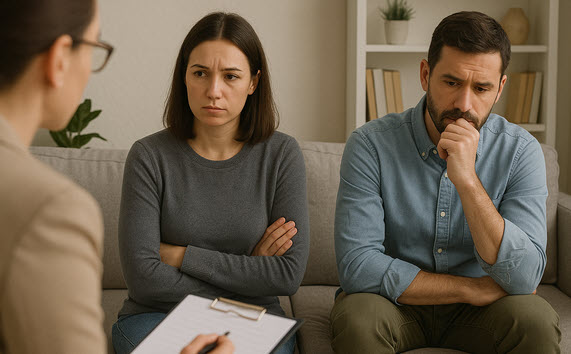
Marriage counseling (couples therapy) is guided by a trained therapist who helps partners communicate clearly, resolve conflict, and rebuild connection.
- Assess relationship dynamics and patterns
- Identify core issues driving conflict
- Learn practical communication skills
- Practice conflict resolution strategies
- Use at-home exercises to solidify progress
How Effective Is Marriage Counseling?
Studies show strong outcomes for engaged couples who practice skills between sessions and seek help before problems are entrenched.
What Drives Success?
1) Timing
- Seeking help early improves outcomes
- Waiting years makes patterns harder to change
2) Mutual Commitment
- Both partners attend and participate
- Consistent sessions and homework matter
3) Therapist Fit
- Comfort and trust with your therapist help
- Different approaches fit different couples
When Counseling Works Best
- Communication issues: learn active listening and clear expression
- Trust repair: structure for accountability, forgiveness, and rebuilding
- Life transitions: support during parenthood, career shifts, health changes
- Recurring conflict: break negative cycles and resolve root causes
When Counseling May Not Be Enough
- Safety concerns or abuse: seek specialized help first
- Untreated severe mental health or addiction: individual care may be needed
- Total disengagement: therapy is limited if one partner refuses to participate
Common Therapy Approaches
- Emotionally Focused Therapy (EFT): reshapes negative emotional patterns
- The Gottman Method: research-based tools for managing conflict and building connection
- CBT for couples: change harmful thoughts and behaviors
- Imago: link childhood experiences to current dynamics
How to Maximize Success
- Start early—don’t wait for a crisis
- Choose a therapist who feels like a good fit
- Commit to sessions, homework, and daily practice
- Set realistic expectations—progress typically builds over 12–20 sessions
Long-Term Benefits
- Stronger communication and conflict skills
- Greater emotional intimacy and trust
- Better problem-solving for future stress
- A more resilient relationship foundation
FAQs
Can marriage counseling save a marriage?
Often, yes—if both partners are motivated, seek help early, and work with a compatible therapist.
How effective is it?
Most couples report meaningful improvement and many maintain gains long-term with continued practice.
When is it most helpful?
For communication breakdowns, trust repair, major transitions, and recurring conflict cycles.
When might it not be enough?
In cases of abuse or safety issues, untreated severe mental health challenges, or complete disengagement.
How many sessions are typical?
Many couples notice significant change in 12–20 sessions, with ongoing practice afterward.


